
 EN

Steel house construction stages follow seven consecutive steps: initial contact, project and design, pre-production, ground and site preparation, framing, assembly and cladding, and finally accessories and finishing. There is no single answer to "how many days does a steel house take?" — the total time depends on the size of the project, the condition of the plot and the ground, the building permit process, and the season. This guide describes the process in Turkey; if you are building in another country, your local regulations will differ. This article walks through all seven stages step by step and explains the factors that determine the timeline, as well as the scope of a turnkey delivery.
What Are the Steel House Construction Stages?
Building a steel house, valued for being quick to build, safe and offering a spacious living area, is a highly practical option today. Completed within a timeframe that varies according to the user's needs, the size of the plot and the materials used, steel houses are trusted by many users in the construction sector because they provide a healthy, comfortable and liveable space and are resistant to earthquakes.
There are a number of stages that make up the steel house construction process. These stages are set out within a framework of rules that must be followed step by step so that the steel house is built smoothly and safely.
Stage 1: Initial Contact
Before construction on a steel house begins, our customer needs to get in touch with Özok Steel so that certain preparations can be made and a decision can be reached on how the process will proceed. Discussing your needs, the size of the plot, the materials to be used and the budget that covers all of these ensures the process starts in the most efficient way possible. The expectations clarified at this stage directly affect the schedule of the steps that follow.

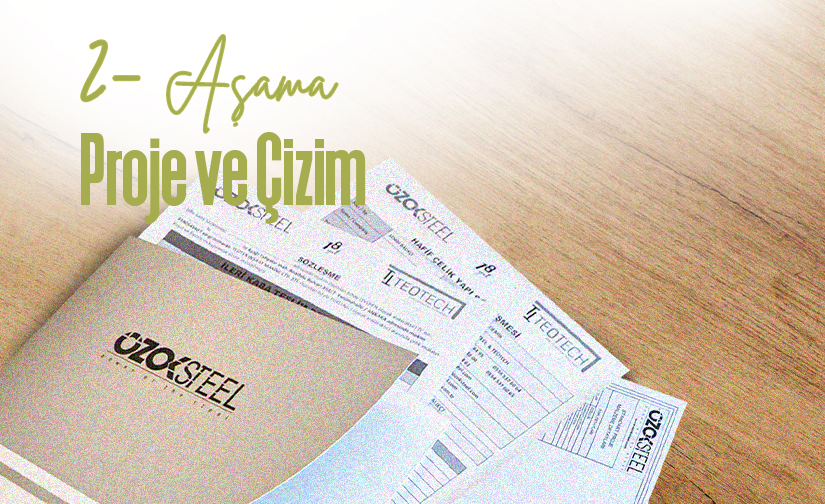
Stage 2: Project and Design
Once the first stage is complete, creating the project and carrying out the design work is essential so that the process, which has been started professionally, can continue. The design stage requires careful planning to determine the conditions, form and aesthetics of the living space. Positioning the building according to the condition of the plot, and obtaining approval, requires the project and design to be carried out to engineering standards.
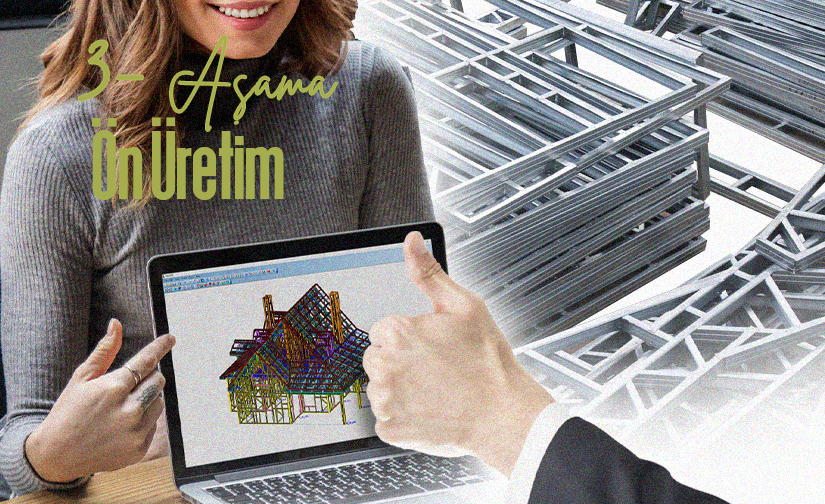
Stage 3: Pre-Production
Once the design is complete and approved, the pre-production stage begins. In the factory, using computer-controlled machinery, light steel constructions are precisely turned into wall panels and load-bearing columns, then shipped to the construction site together with doors, insulation materials and other components. Producing the parts in a factory environment is the single most important factor that shortens on-site assembly time for a steel house; because the parts arrive at the plot ready to use, only assembly takes place on site.
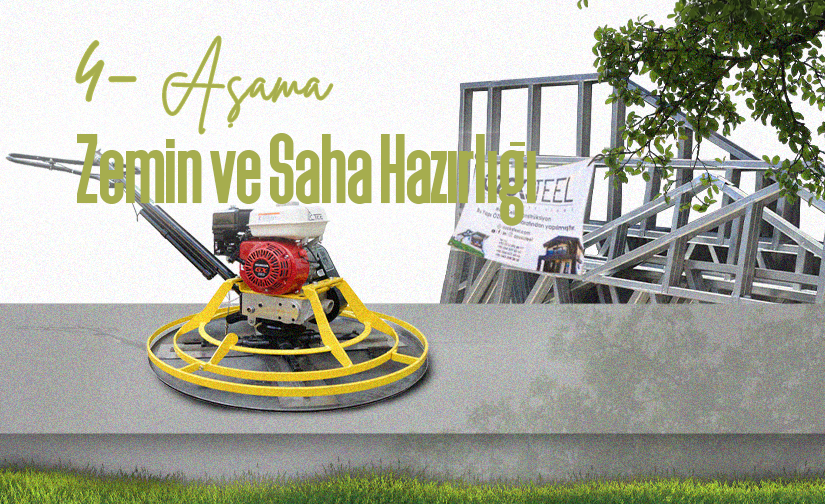
Stage 4: Ground and Site Preparation
For the project to be carried out successfully and for a solid, safe structure to be built, the ground conditions need to be brought into a suitable state. Suitable ground conditions are highly important for the construction of the building. Ground and site preparation covers work such as pouring the foundation slab and positioning the anchor bolts for the building. In most projects this stage runs in parallel with pre-production at the factory, which is one of the planning advantages that shortens the overall schedule.
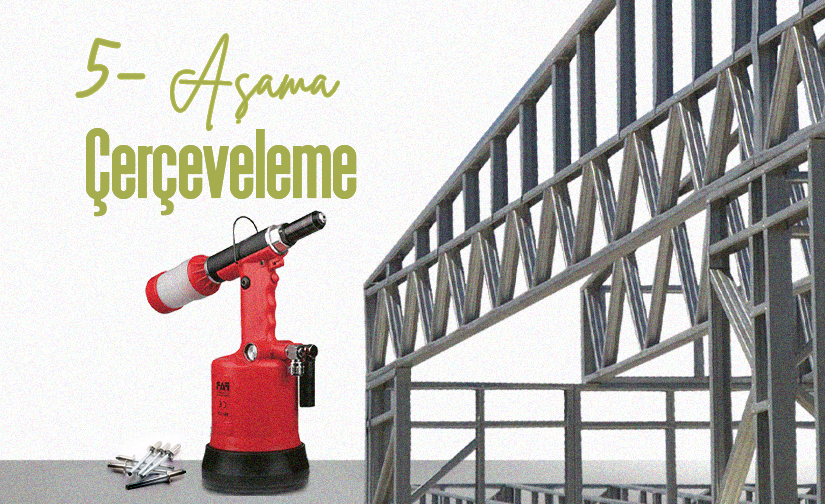
Stage 5: Framing
Özok Steel's experienced engineers, technicians and staff join the pre-produced materials, once ground and site preparation is complete, using smart screws, rivets and bolts, making the structure resistant to earthquakes. Because screwed connections require no wet trades, assembly proceeds quickly and dependence on weather conditions is reduced.
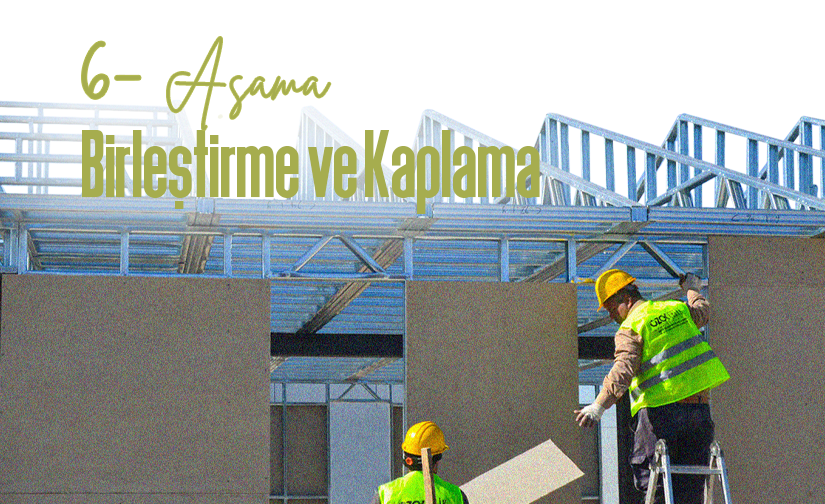
Stage 6: Assembly and Cladding
Once the frame has been assembled, assembly and cladding work can begin. At this stage, the wall panels are mounted and fixed to the secondary frame. Insulation is also installed at this stage. Once the walls are fixed in place, the roof panels are installed.
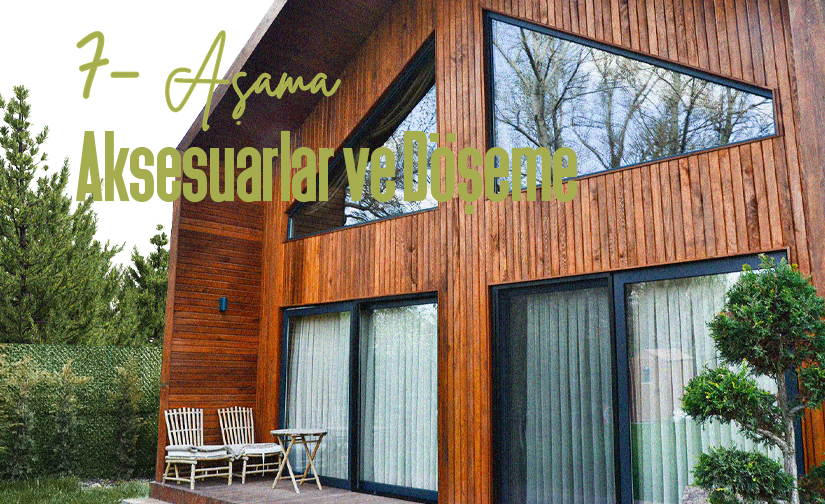
Stage 7: Accessories and Finishing
The final step is finishing the steel structure with the chosen accessories. Doors, windows, vents, extractor fans and roof windows are installed at this stage. At the end of this step, the building is delivered together with interior works, according to the turnkey scope set out in the contract.
How Many Days Does a Steel House Take? Factors That Extend the Timeline
Assembly itself is the fastest-moving part of the process; it is the preparation steps before assembly that actually determine the schedule. This is why it is worth being cautious of any commitment that answers the "how many days" question with a fixed number. The main factors that affect the total time are:
- Permit process: Assembly cannot begin until the projects are prepared and the building permit is issued. How busy the municipality is and how complete the file is directly affect the length of this step.
- Geotechnical survey and foundation work: The bearing capacity of the ground determines the type of foundation. On ground that needs reinforcement, foundation work can take longer, and the concrete curing time is added to the schedule.
- Weather conditions: Although assembly can take place in all four seasons, pouring the foundation and exterior cladding work are affected by heavy rain, frost and storms.
- Material supply: If non-standard, custom choices are made for windows, doors, cladding and interior materials, supply time can be extended.
- Access to the plot: Narrow roads, sloped land or locations outside the city can make transport and crane operations more difficult, extending the time spent on site.
Most of these factors can be managed with proper planning. For example, running factory production and ground preparation in parallel largely eliminates waiting periods.
What Does Turnkey Mean, What Does It Cover?
A turnkey steel house process means that all steps, from design to the completion of interior works, are carried out by a single party, and the house is delivered ready to move into. Although it sounds straightforward, in practice the scope of the term "turnkey" varies from company to company; this uncertainty over scope is the problem people building a house run into most often.
Before signing a contract, it is worth clarifying whether the following items are included in the scope:
- Foundation and ground work: Geotechnical survey, excavation and pouring the foundation are excluded from the scope in some proposals.
- Infrastructure connections: Connecting electricity, water and sewage to the network is generally assessed separately.
- Interior works: It should be stated clearly to what level flooring, kitchen cabinets, sanitary ware and interior doors are included.
- Permit and project costs: Official fees and design engineer's fees are, in most cases, the responsibility of the building owner.
You can see how these steps work at Özok Steel, step by step, on our process page, and review completed projects of different scales in our work section.
Permits Required to Build a Steel House
Before starting a steel house build, certain permits need to be obtained, just as with any other construction, in Turkey. To build a steel house on a given plot, the zoning status of the plot first needs to be suitable. The owner of the building, or their legal representative, then needs to apply to the zoning department of the municipality — or, outside metropolitan boundaries, the provincial special administration — for a building permit. This application needs to include the title deed, the architectural project, the structural design, the electrical and plumbing plans, drawings and calculations, and a surveyed or, if unavailable, a dimensioned site sketch. The purpose of all these permits is to ensure that the building — to be used as a residence, workplace, agricultural or livestock facility, or any related outbuilding — complies with the law and regulations. We cover every step, from checking the zoning status to obtaining the occupancy permit, in detail in our steel house building permit guide.
Documents Required for Steel House Construction
Steel structure construction is subject to a building permit in Turkey under Zoning Law No. 3194, and a number of documents are required for the permit:
- Document related to the zoning status
- Title deed of the plot where construction will take place
- Copy of the survey/site plan
- If the plot is jointly owned, a consent document from the other shareholders
- Steel house project
- Information regarding the building's electrical and water installations
What You Need to Know About the Building Permit
A building permit needs to be obtained before starting steel house construction. The permit required is not a special one — it is the same permit required for any other type of construction. However, a document is issued for the building based on the project submitted to the municipality, which includes the structural calculations. A copy of this document is given to construction supervision firms, and if approved, the permit and, eventually, the occupancy permit are obtained. The permit has a set period of validity; if the building is not completed within this period, the permit needs to be renewed. Fees and charges are set according to the size of the building and the municipality it falls under.
Which Structures Are Built Using Steel?
Steel has come to be used extensively in the construction sector. With its many advantages, this metal is preferred for the construction of the following:
- House
- Villa
- Apartment building
- Prefabricated house
- Sports facilities
- Hangars and warehouses
- Factory buildings
- Workshop
Long-lasting, beneficial for health, offering more spacious living areas and structures that can breathe, steel houses are in demand in many parts of the world. Steel structures, which allow for practical solutions when it comes to maintenance, repair and renovation, also save users certain costs.
Frequently Asked Questions
How many days does a steel house take to complete?
There is no single number of days that gives an accurate answer; the timeframe depends on project size, the permit process, ground conditions and the season. That said, because the load-bearing system is factory-made and only assembly happens on site, a steel house follows a far more predictable schedule than traditional construction. A precise plan is worked out for your plot and project during the project consultation.
In which season does assembly take place?
Steel house assembly can take place in any of the four seasons. Because very little wet-trade work is involved, season-dependent requirements such as waiting for concrete to cure are reduced to a minimum. Even so, foundation and site work generally proceed more smoothly in dry periods, so weather is taken into account when planning; work may pause for safety in snow, frost or storms.
Does assembly stop in the rain?
Assembly usually continues in light rain; because screwed connections require no wet-trade work, rain does not cause the long pauses typical of reinforced-concrete construction. Work is paused for safety reasons when there is heavy rain, storms or a risk of lightning. Since these short pauses are already factored into the planning, they generally do not seriously affect the overall schedule.
Is the foundation included in the turnkey price?
This depends on the scope of the contract. In some proposals foundation work is included, while in others it is left to the building owner, because foundation cost is shaped by the result of the geotechnical survey. When getting a quote, we recommend clarifying in writing whether the foundation, infrastructure connections and interior works are included in the scope.
Do you need an occupancy permit before moving in?
Yes. Once construction is complete, an occupancy permit is obtained from the municipality. Permanent electricity and water connections, transfer to condominium ownership and mortgage use all depend on this document. Even once assembly is finished, moving in before the occupancy permit is granted can cause problems with utility connections and financing, so this step must always be completed last.
Get in touch with Özok Steel for detailed information about steel structures that are far more durable than reinforced-concrete buildings and carry modern lines in their appearance, and start planning your project.
The stages and timeframes described in this article provide a general framework; the overall schedule depends on the size of the project, the location of the plot, ground conditions, the permit process and the season. A schedule specific to your project is agreed together during the consultation stage.
