
 EN
EN 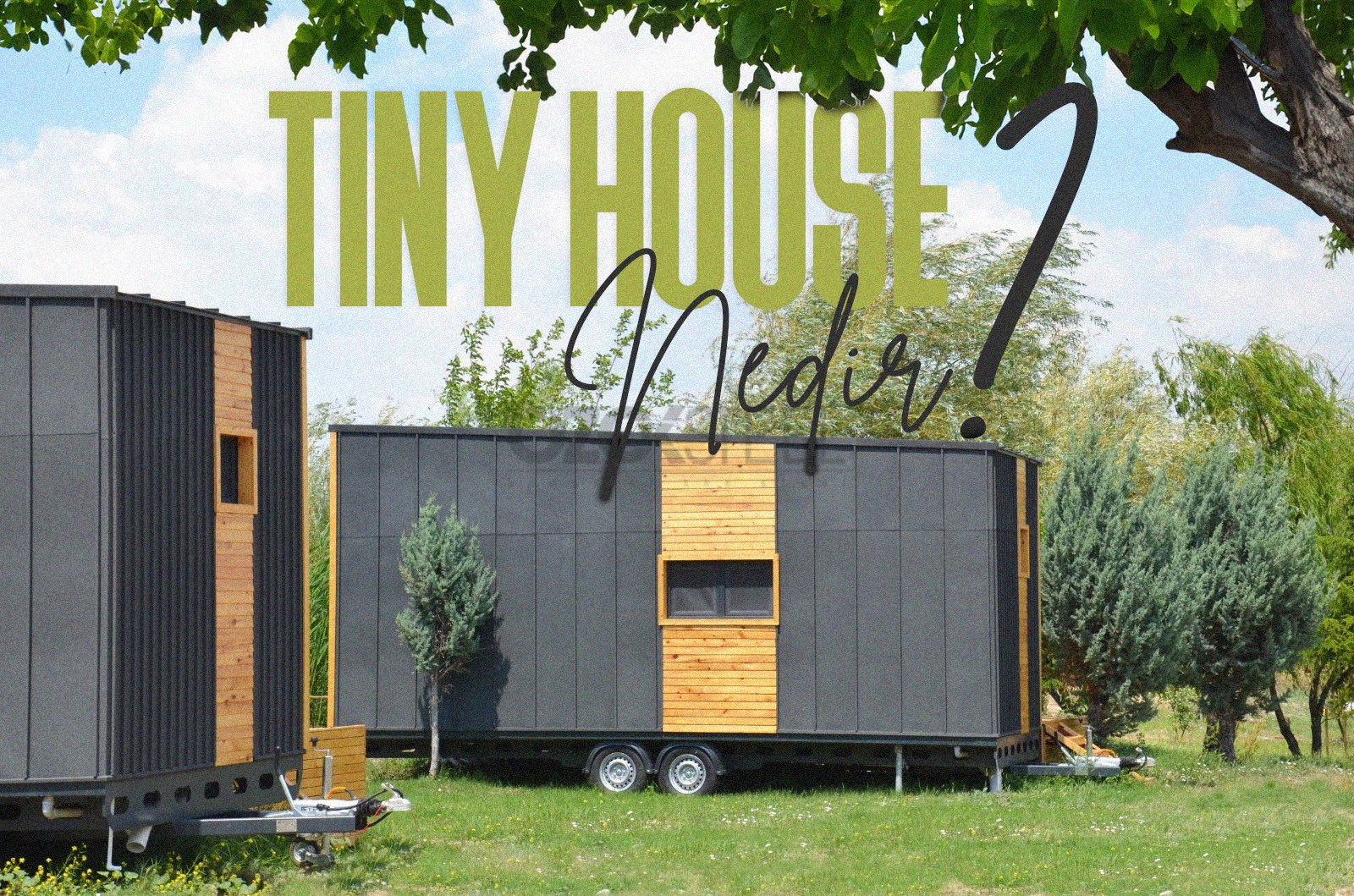
Tiny house is one of architecture's answers to the philosophy of minimalism. But it falls short to define this movement simply as a "small house"; tiny house is a way of life before it is a type of building. In this article, we look at where the movement came from, the thinking behind it, and who small-space living genuinely suits — and who it doesn't. If you're curious about the technical definition and features of tiny house, you can take a look at our tiny house article.
Where Did the Movement Come From?
The mortgage crisis that broke out in the United States in 2008 became a global crisis that affected the whole world. During the crisis, a large number of people, particularly in the United States, lost their homes. Afterwards, people were observed turning towards minimalist living at a much higher rate than before. The tiny house idea found wide acceptance in exactly this environment.
It would not be accurate to say the movement's appeal was purely economic. The real question the crisis raised was this: is the debt a person will spend most of their life paying off actually taken out for the space they truly need? Tiny house answered this question with "no" — and proposed opening up freedom by shrinking debt.

How Many Square Metres Count as a Tiny House?
There is no exact, official definition of square metreage. In common usage, structures that do not exceed around 30 m² and are designed to meet the basic living needs of a single person or a couple are considered under this heading. What sets the boundary is less a number than an approach: a floor plan where every square metre takes on more than one function and no space is left dead.
What "Less Is More" Really Means
Known in English as "less is more," this approach proposes a philosophy of minimalist living. In today's society, people spend their days working and consuming more than they need. This philosophy, by contrast, evaluates life and living spaces through simplicity. Its core elements are:
- A simple, calm perception of life
- A way of living that is close to nature and in harmony with it
- Living spaces designed with simplicity, using few possessions
Where Tiny House and This Philosophy Meet
The idea that less is more is one of the most fundamental factors shaping the tiny house concept. Built with less material, these structures also contribute, for the same reason, to a reduced impact on nature. The same logic runs through the interior layout: maximum efficiency with few possessions.
Simplifying the living space matters for clearing up the mental and physical clutter that everyday life creates. In a small house, every object has to have a place and a reason — and over time, this necessity turns into a habit.
Who Does Living in a Small Space Suit?
It's worth discussing this movement without romanticising it. Tiny house living does not suit everyone, and knowing this before you buy is far better than finding it out afterwards.
It generally suits:
- People living alone, or couples without children
- People who don't work from home and spend a lot of time outdoors
- People without a habit of accumulating possessions
- People who want to live in nature without making a large construction investment
- People planning weekend and holiday use
It generally challenges:
- Families with children — the need for separate space grows in particular as children get older
- Full-time home workers; not being able to separate the work area from the rest area is tiring
- People who need to store equipment for a hobby or profession
- People who host guests often
- People looking for a permanent home — the legal status issue requires separate planning
The Practical Side of Minimalism
Living in a small space doesn't start with reducing your possessions — it starts with deciding. Deciding what to let go of is harder than most people think, and this process needs to happen before you move into the house.
In practice, the categories that prove most difficult are: seasonal items and clothing, kitchen equipment, books and archives, and sports gear. Moves made without a solution worked out for these four categories usually don't last long.
Experienced tiny house dwellers share the same advice: before you move, note down for a few months which possessions you actually use. Most people find they regularly use only a small share of what they own. This list becomes a realistic starting point both for planning the small house and for deciding what to leave behind.
The second practical point is building storage into the plan itself. In small houses, storage isn't solved by adding furniture afterwards; the inside of stair steps, the space under the bed, the roof void and wall thickness are turned into storage during the design stage. If this isn't thought through while the plan is being drawn up, it can't be made up for later.
The third point is the relationship with the outdoors. In small houses, part of the living space effectively spills outside: the terrace, the porch, the garden. Designing these areas to suit the climate noticeably makes up for the smallness of the interior.
Three Lasting Ideas the Movement Has Brought
Even if you don't choose tiny house as your type of home, some of the ideas the movement has produced are useful in any housing decision.
First: square metreage and quality of life are not directly proportional. A poorly designed large floor plan can be less functional than a well-designed small one. What matters is not the amount of space, but how it is divided and how well it serves your daily flow.
Second: every square metre has a cost — both to build and to run. The construction cost of a space is a one-off, but heating, cooling, cleaning and maintenance costs continue for the building's whole life. A room that's rarely used keeps costing you even while it stands empty.
Third: flexibility can be worth more than size. Needs change over time. A plan that can be divided later and adapted to different functions stays useful for longer than a fixed plan built large from the start.
These three ideas aren't limited to the tiny house scale; the same questions can be asked when designing a compact, detached house too.
Tiny House Living in Turkey
This guide describes the process in Turkey; if you are building in another country, your local regulations will differ. The philosophy is universal, but its application depends on local rules. In Turkey, where a tiny house can be placed, under what conditions it counts as a vehicle versus a structure, and whether a building permit is required, is a separate matter that should be assessed independently of the movement's romanticism.
A wheeled structure that is not fixed to the ground and a permanent structure set on a foundation fall into completely different categories under the law. We cover this distinction and the differences in practice in detail in our article on tiny house legal status in Turkey. We recommend reading it before you decide.
Before You Decide
Questions you should ask yourself before choosing tiny house:
- Will this be my permanent home, or a secondary use?
- What is the title deed classification and zoning status of the land I'll place it on?
- Will my needs be the same in five years?
- How will I handle electricity, water and wastewater connections?
- If I change my mind, what will I do with this structure?
The last question matters in particular. A tiny house's resale value works differently from that of a permanent home: the pool of buyers is narrow, and the status of the land it sits on directly affects the sale. Thinking through the possibility of changing your mind from the outset doesn't weaken the decision — it makes it realistic.
Some of these questions may point toward a solution other than tiny house. Our comparison guide, which weighs all three systems side by side, can make this decision easier. We cover the construction process and cost items in our article on tiny house construction and prices.
At Özok Steel, we design small-scale structures too, to the standard of a permanent building, shaped around the project and the conditions of the land.
Frequently Asked Questions
How did the tiny house movement come about?
Although its roots go back further, the movement became widespread after the 2008 mortgage crisis. During the crisis, large numbers of people who lost their homes began searching for an alternative to large housing debt. Small, low-cost and portable living spaces found wide interest in this environment.
Up to how many square metres does a building count as a tiny house?
There is no official limit. In common usage, structures that do not exceed around 30 m² are considered under this heading. What matters more than the number is the design approach: a compact layout where every space takes on more than one function and storage solutions are built into the plan itself.
Can a family live in a tiny house?
It's possible for short-term and holiday use, but it's generally challenging for permanent family life. As children grow older, the need for separate space arises, hosting guests becomes harder, and storage problems become more pronounced. For families looking for a permanent home, larger-plan solutions tend to be more suitable.
Does minimalist living suit everyone?
No, it doesn't. Full-time home workers, people who need to store equipment for a hobby or profession, and those who host guests often, struggle in a small space. Moves made without a solution for seasonal items, book archives and kitchen equipment usually don't last long. The decision should be made not on romantic expectation, but by honestly assessing your daily habits.
Is it legal to live in a tiny house in Turkey?
What decides this is whether the structure is on wheels or fixed to the ground. A structure that is permanently placed and connected to infrastructure counts as a building under the law and is subject to a building permit. Since practice varies from municipality to municipality, you should consult the municipality your land belongs to.
This article is for general information purposes only. The legal status of a tiny house in Turkey varies depending on the classification of the land, its zoning status and local practice; we recommend consulting your municipality and provincial special administration before making a decision.
