
 EN
EN 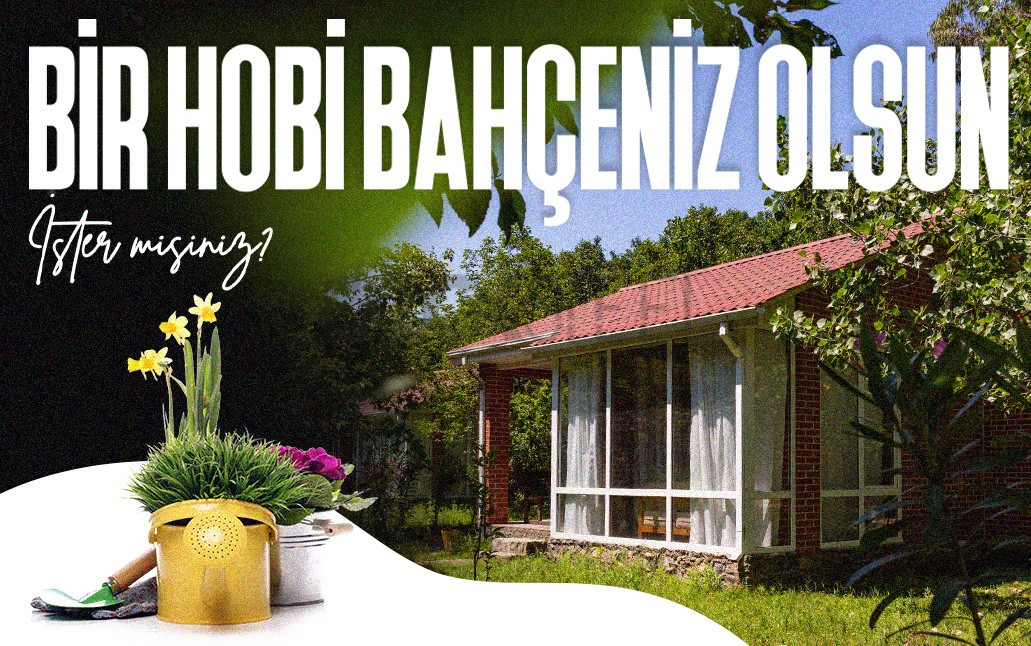
Can you build a house on a hobby garden plot? The short answer depends on how the land is registered in the title deed. Most land sold under the name "hobby garden" is, in the title deed, registered as jointly owned agricultural land — field, vineyard or garden — and as a rule permanent housing cannot be built on this kind of land. What is permitted is limited to small agricultural structures that meet certain conditions, and practice varies from municipality to municipality. This guide describes the process in Turkey; if you are building in another country, your local regulations will differ. This article goes step by step through what is allowed in which situation, the building permit question, and the risks involved.
Can You Build a House on a Hobby Garden Plot?
Building a house for your hobby garden can bring your dream home to life — but turning that dream into reality first depends on correctly reading the legal status of the land. With light steel structures designed to your requirements, you can create the space you have been dreaming of within your hobby garden; but which structure can be built, at what size and with what permit, is determined by the title deed classification of the land.
What matters here is not the structure itself but the land. The very same structure can be permitted without issue on a zoned plot, while on an agricultural-classified hobby garden it can be treated as an unauthorised structure. This is why there is no single, general answer to the question of building a house on a hobby garden; the answer depends on the title deed record, the region the land is in, and how the local authority applies the rules there. Before making a decision, we recommend always consulting the municipality your land falls under — or, outside metropolitan boundaries, the provincial special administration.
What Is a Hobby Garden, How Does It Appear in the Title Deed?
Hobby gardens, which have become increasingly popular, are small agricultural plots that let people escape the stress of city life and reconnect with nature. Particularly popular among the middle-aged and older population as urbanisation has increased, these areas can be used to grow vegetables and fruit. However, "hobby garden" is not a land classification recognised in the title deed; land used under this name legally falls into one of two different categories.
Municipal Hobby Gardens
In this model, the infrastructure of the area is prepared by the municipality; plots are generally not sold but allocated or leased for a set period. Anyone who pays the required fee can use these gardens and grow their own vegetables and fruit. Structures such as huts and sheds on the plots are, in most cases, standard-type buildings set up by the municipality as part of its own project; users cannot build their own house on this land.
Hobby Gardens on Shared Title Deeds
The model that actually dominates the market is a large agricultural plot divided into shares and sold under the name "hobby garden". In this case, the title deed you receive does not say "hobby garden"; the land is registered as a field, vineyard or garden, and in most cases as a joint share. This means both the restrictions on agricultural land and the consent required from co-owners under shared ownership come into play at the same time.
| Topic | Municipal Hobby Garden | Hobby Garden on Shared Title Deed |
|---|---|---|
| Ownership | Remains with the municipality, use is allocated | Shared private ownership |
| Title deed record | No title deed is transferred to the user | Share registered as field, vineyard or garden |
| Building possibility | Limited to standard structures in the project | Depends on the land classification and permits obtained |
Legal Limits: What Is and Isn't Allowed?
Agricultural land is protected under legislation concerning soil conservation, and using it for non-agricultural purposes requires permission. On the construction side, the framework in Turkey is set by Zoning Law No. 3194 and its related regulations. The general picture can be summarised as follows:
- What may be permitted: Simple structures that support agricultural production — a tool shed, or small structures such as a vineyard hut — may be possible under certain conditions and with prior permission. Because the size and conditions allowed vary from region to region, you need to find out the applicable limits from the authority your land falls under.
- What is not permitted: Permanent housing intended for continuous residence, an unauthorised concrete foundation, unauthorised electricity and water infrastructure, and effectively converting the land into a residential plot.
- What is assessed separately: Wheeled structures that are not fixed to the ground and retain the status of a vehicle can be treated differently by some authorities. We covered the details of this distinction in our is a tiny house legal article.
A shared title deed adds another layer to this picture: under joint ownership, one co-owner cannot build independently of the others; consent from co-owners is required as part of the permit process. When buying a hobby garden plot, we recommend relying on the title deed record and the authority's written opinion, not on claims such as "everyone else has built one, so can you".
Do You Need a Building Permit for a Hobby Garden Structure?
Yes — because any structure that is fixed to a foundation, connected to infrastructure and used as housing is, regardless of material, treated as a permanent structure under Turkish law and is subject to a building permit. Whether the structure is prefabricated, a container or steel makes no difference; what matters is not whether it looks movable, but whether it is, in effect, permanent.
This is exactly where the real difficulty with hobby gardens begins: a building permit in Turkey is only issued for plots whose zoning status is suitable for housing. As a rule, no residential building permit is issued for a hobby garden plot that retains its agricultural classification; the zoning status of the land would first need to change, which may not be possible for every plot. Even if a permit for an agricultural structure can be obtained, this is not a residential building permit. We explain step by step how the process works, from checking the zoning status to the occupancy permit, in our how to get a steel house building permit guide.
The Risks of Building Without a Permit on a Hobby Garden Plot
The attitude of "it's a small structure, nobody will mind" is common on hobby garden plots; in practice, however, the picture is different. The main risks of an unauthorised structure are:
- Demolition order and administrative fine. Structures that breach zoning legislation can be subject to a demolition order and an administrative fine; the entire amount spent on the structure can be lost.
- No utility connections. Permanent electricity and water connections are, as a rule, not granted to structures without an occupancy permit.
- Difficulty selling or transferring. An unauthorised structure cannot be registered on the title deed; a sale that is already difficult on shared land becomes even harder with an unauthorised structure attached.
- Exposure to complaints. On shared land, a complaint from even a single co-owner or a neighbour can trigger an inspection process. The fact that there is no issue today does not mean there won't be one tomorrow.
- Uncertainty over amnesty expectations. There is no guarantee that past building registration amnesties will be repeated; building on that assumption is not a sound plan.
Suitable Building Solutions for a Hobby Garden
Once you have found out from the authority what is permitted on your land, the next step is choosing the right building system. At this point, let's clear up a point that is often confused in the market.
Are Prefabricated, Container and Light Steel the Same Thing?
No, they are not. Prefabricated structures are built by preparing the wall and roof panels in a factory and then assembling them on a previously determined plot. Container structures, on the other hand, are formed by transporting and positioning ready-made modules in the shape of a steel box. Light steel structures are built with a load-bearing system made of galvanised steel profiles and, of these three systems, come closest to the comfort of permanent housing. We covered the strengths and weaknesses of each system one by one in our container home, tiny house and steel house comparison article.
The shared advantages of factory-built structures genuinely suit hobby garden use: because assembly takes little time and requires less labour, the process is much more predictable than reinforced-concrete construction. Depending on your needs and preferences, structures can be planned as single or two storeys, extended later, and, if needed, dismantled and moved to another site. This portability is, in itself, a safeguard on hobby garden plots where permit conditions can change. The light steel load-bearing system also offers an advantage in earthquake performance thanks to its low building weight.
At Özok Steel, we produce vineyard huts and compact living spaces for hobby gardens using the light steel system. We bring together quality materials and dedicated workmanship, and design the structure according to the conditions of your land and the permit framework. You can browse different models and sizes on our product pages.
Frequently Asked Questions
Is it legal to build a house on a hobby garden plot?
It depends on the classification of the land. Permanent housing cannot, as a rule, be built on shared-title hobby garden plots registered in the title deed as a field, vineyard or garden; only small agricultural structures that meet the conditions may be permitted. Municipal hobby gardens with their own project follow that project's own rules. For a definitive answer, consult the municipality your land falls under.
Can a house be built on shared title deed land?
A shared title deed means joint ownership: one co-owner cannot build independently of the others, and consent from co-owners is required as part of the permit process. Even with consent, the land's classification does not change — housing still cannot be built on agricultural land, consent or not. So the possibility of building on shared land depends on both co-owner consent and the land's permit framework together.
Can electricity and water be connected to a hobby garden?
Permanent electricity and water connections are, as a rule, only granted to structures with an occupancy permit; unauthorised structures do not receive a permanent connection. Municipal projects may include shared infrastructure. In practice, solutions such as solar panels, water tanks and existing legal options on the land are used; conditions depend on the local utility provider and authority.
Can a building permit be obtained for a house on a hobby garden?
A residential building permit is only issued for plots with suitable zoning status. As a rule, no residential permit is issued for a hobby garden plot that retains its agricultural classification; the zoning status would first need to change. A permit for an agricultural structure is not a residential building permit. You can confirm your land's actual status with a zoning status document from the municipality.
Can a tiny house be placed in a hobby garden?
A wheeled tiny house that retains vehicle status and is not fixed to the ground can be treated by some authorities as similar to a parked vehicle. If the house is connected to the ground, linked to infrastructure and used as permanent housing, it is treated as a structure and becomes subject to permits. Because practice varies by municipality, we recommend obtaining a written opinion before placing one.
If you are planning a structure for your hobby garden that fits the permit framework of your land, get in touch with us and we can review the options together.
This article is for general information only and does not constitute legal advice. Practice regarding hobby gardens varies from municipality to municipality and according to the classification of the land, and the legislation can also change over time. Before starting any structure, we recommend consulting the municipality your land falls under — or, outside metropolitan boundaries, the provincial special administration.
